Why Is It So Windy in Tamarindo? The Papagayo Winds Explained (Months, Hours, Calm Spots)
The Papagayo winds in Costa Rica are the dry, gusty northeasterlies that blow across the Guanacaste coast from mid December to March. They’re why a Tamarindo afternoon in January feels like someone opened a giant hair dryer, and why the surf looks so clean at 7am.
They don’t bring rain and they don’t blow all day. In the sheltered bays around Playa Flamingo you’ll barely notice them. Below: when they blow, where they hit, and how to plan the week around them.
What are the Papagayo winds?
A gap wind. Every few weeks in winter a cold high-pressure system slides off North America into the Caribbean. The mountain spine of Central America blocks that air everywhere except the low gap around Lake Nicaragua. The air squeezes through, speeds up, and bursts out over the Gulf of Papagayo on the Pacific side. The Gold Coast sits on the southern edge of that jet.
Each surge lasts two to four days, then the wind eases for a week or two until the next front. Surges show up on the weather apps four or five days out. The jet also pushes warm surface water offshore, so the sea runs a few degrees cooler and greener in January and February than in May. Fishermen love it: the cooler water brings bait, and the sailfish follow.
Which months are the Papagayo winds?
Mid December through March, hardest in January and February. The first real gusts on the central Gold Coast arrive around December 15, the same week the Christmas crowds land. The jet peaks in February, eases through March, and by the last week of April the bays at Flamingo and Conchal are glassy again.
| Month | Wind on the beach | What it means |
|---|---|---|
| November to mid December | Light, under 10 knots | Calmest water of the dry season, rates 30 to 40 percent below Christmas |
| Mid December to February | 15 to 25 knots on windy afternoons, 30 to 40 offshore in a surge | Book boats before noon, cooler nights, clean morning surf |
| March | Fading, 10 to 20 knots on surge days | Hottest month, fewer windy spells, Easter week crowds |
| Late April to May | Gone | Glassy bays, best snorkelling visibility, first showers mid May |
For the weather around the wind, read best time to visit Tamarindo and the Flamingo and Conchal calendar. Costa Rica in December covers holiday prices and booking windows.
What time of day does the wind blow?
Late morning to late afternoon. A surge day starts dead calm at sunrise, the first gusts come through around 10am, the wind peaks between 1pm and 4pm, and it drops with the sun at 5:30pm. Evenings are still, so a terrace dinner works even in the windiest week of February.
That rhythm sets the plan. Boats, snorkelling and paddleboards go out in the morning. Beach time with small kids is 7am to 10am. The pool and a nap take the windy hours. Surfing in Tamarindo is a dawn sport in these months: the Papagayo blows from land to sea, offshore on this coast, so it holds the waves up and grooms them until it gets strong enough to blow spray back off the lip. The month-by-month surf guide has the detail and the surfing page covers lessons.
Where is it windiest, and where is it sheltered?
Windiest from Playas del Coco north; sheltered in the bays from Potrero to Conchal. The jet exits the gap straight over the Gulf of Papagayo, so Playa Hermosa, the Papagayo peninsula resorts and Playas del Coco take it head on. Bahia Salinas near the Nicaraguan border, 1 hour 45 minutes north of Flamingo, gets 20 to 40 knots so reliably that it’s Costa Rica’s kitesurfing bay from November to May.
Fifty minutes south at Flamingo the same surge arrives as an afternoon breeze with a bit of chop. Potrero sits behind a headland and stays flattest, the coves at Las Catalinas are protected, and the south end of Conchal is usually calm while Coco is howling. Tamarindo and Langosta face west and feel it as an offshore wind rather than chop. If you’re choosing between Coco and Tamarindo for January, the wind belongs in that decision; see Tamarindo vs Playas del Coco.
Will the wind ruin a catamaran or fishing trip?
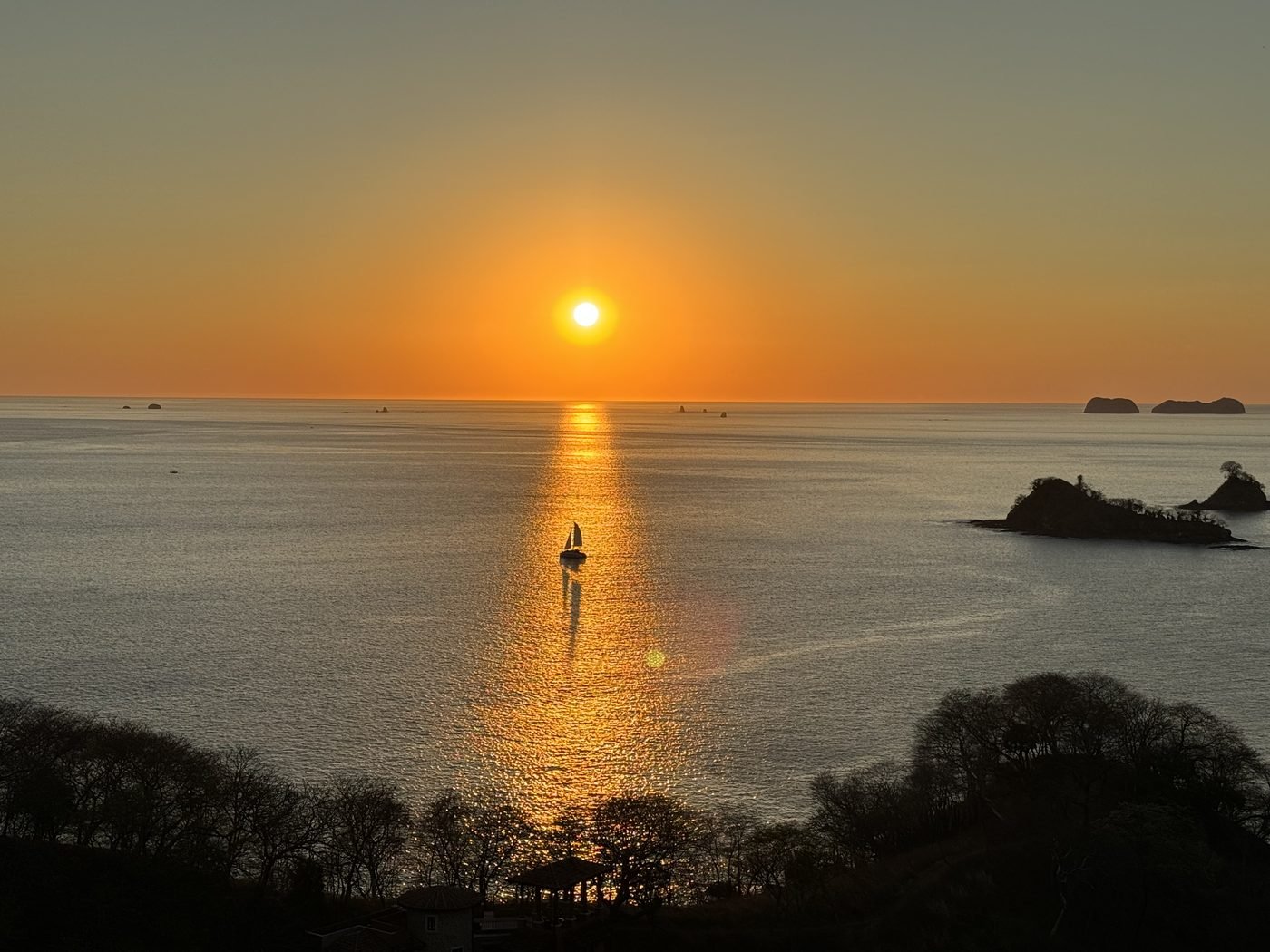
No, if you book the morning or sail the lee. On a surge day the sunset catamaran from Flamingo tucks in behind the Catalina Islands and the Potrero headland, where the water stays flat, and shared trips still run at the usual US$90 to 110 per person. Morning departures at 8 or 9am miss the wind entirely. On the two or three days a season when the gulf is genuinely rough, a good captain cancels and rebooks. Jenny knows which captains make that call early.
Fishing improves in wind season. The cooler water the jet stirs up pulls bait close to shore, and January to March is prime sailfish on this coast. Inshore boats stay inside the islands on windy mornings; offshore boats leave early and are back by early afternoon. The catamaran page and the fishing charters page explain how Jenny matches the boat to the day.
How do you plan a villa stay around the wind?
Pick a pool on the sheltered side of the house. Hillside villas above Flamingo and Potrero face west or southwest, which puts the house between the pool deck and the northeast wind; a pool that faces north up the coast gets gusts across it all afternoon. Ask Jenny which way the terrace faces when you shortlist from the villa list. The upside of a windy week: evenings in the mid 20s instead of the high 20s, almost no mosquitoes, and air conditioning that barely runs after dark.
Weight the beach towels, skip the beach umbrella on surge days (they turn into kites), and bring a cap with a strap. The family week itinerary already puts the boat day in a morning slot and the pool in the afternoon, which is how locals run January.
Frequently asked questions
Why is it so windy in Tamarindo in January?
The Papagayo winds. Cold fronts over the Caribbean push air through the low gap at Lake Nicaragua, and it comes out over Guanacaste as a dry northeasterly that blows hardest from mid December to February, mostly between 10am and 5pm.
What months are the Papagayo winds in Costa Rica?
Mid December through March, peaking in January and February. They fade through March and the bays are flat again by late April. They come in surges of two to four days with calmer stretches between.
Do the Papagayo winds bring rain?
No. They are dry winds and they arrive with the dry season. Skies stay clear; the wind cools the evenings and roughens the open water in the afternoon.
Can you still do a catamaran trip in wind season?
Yes. Book a morning departure or a sunset sail that stays in the lee of the headlands. Shared sunset trips from Flamingo run about US$90 to 110 per person and still sail on ordinary windy days.
What are the best months for calm water in Guanacaste?
Late April and May, then November to mid December. Those windows have the flattest bays and the best snorkelling visibility, with shoulder-season rates.
Written by Rob Cosman. Updated November 2026. Prices in US dollars at high-season rates; check them when you book. Forecasts and climate data: the Instituto Meteorologico Nacional (IMN), Costa Rica’s national weather service, and the Costa Rica Tourism Board (ICT).
Tell Jenny your dates. If you land in a surge week she’ll put the boat day on the calmest morning and point you at the sheltered beaches.
Plan our dry-season trip with Jenny
Planning more of your trip? See our full guide to why travelers book with a local concierge in Guanacaste.
We Will Plan and Book It For You. Free.
Skip the tourist traps and the language barrier. Tell us your dates and what you want to do. We line up the charters, tours, chef, carts and rentals with operators we know personally. No markups, no fees to you.
Get Your Free Plan