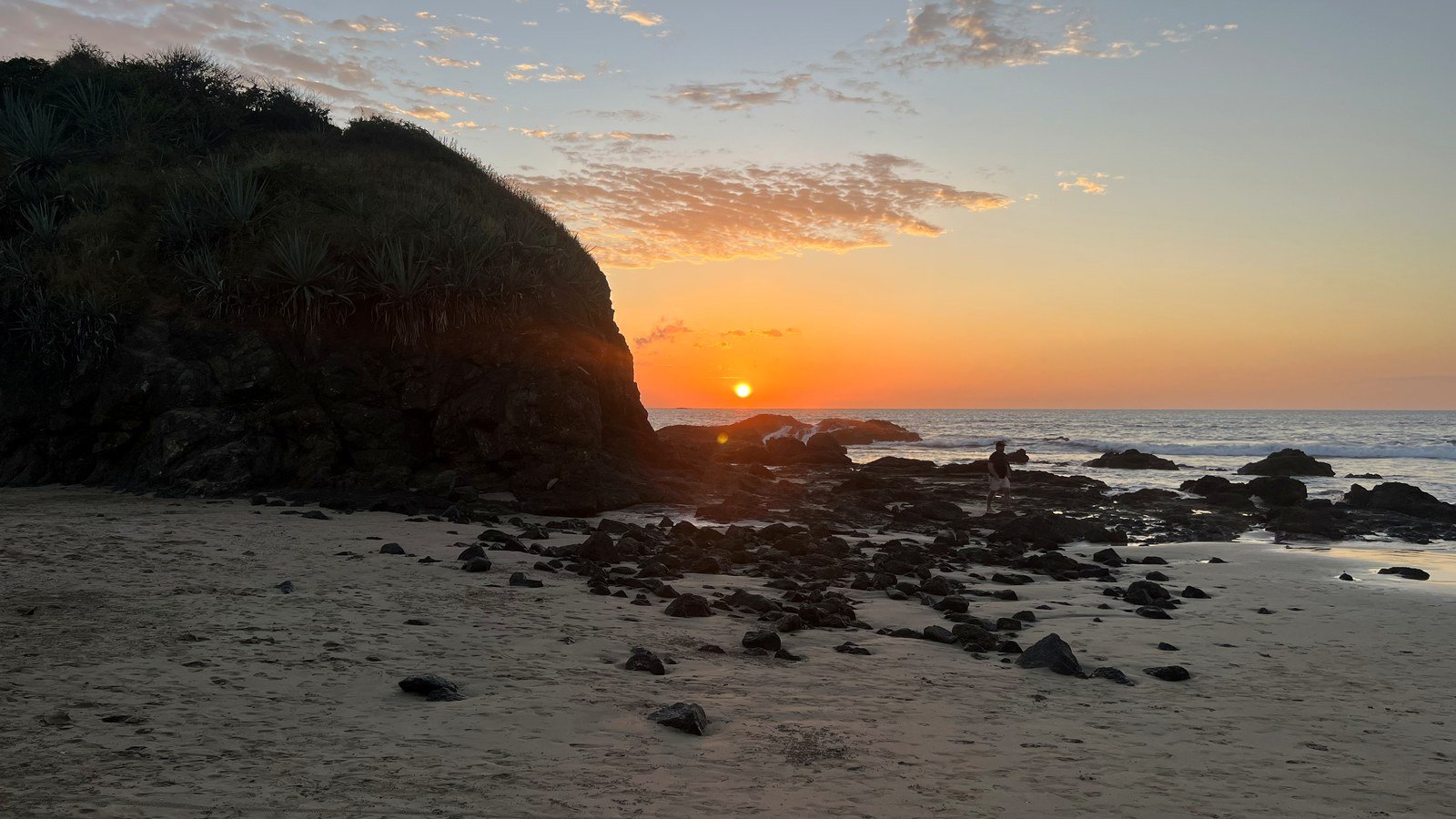
Playa Grande, Costa Rica: The Turtle Beach & Surf Town Guide
By Jenny & the local PlayaCR team· Updated 2026·Guanacaste, Costa Rica
Playa Grande is the long, quiet surf beach directly across the estuary from Tamarindo. It is the most important leatherback sea turtle nesting site on the Pacific coast of the Americas, a beach-break surf spot that runs consistently from December to April, and the place travelers go when they want the Tamarindo waves and weather without the bars, scooters, and crowds.
What is Playa Grande like?
A 4 kilometre stretch of protected sand inside Las Baulas National Park, 10 minutes by boat from Tamarindo. Best known for leatherback turtle nesting from October to February and for clean year-round surf. There is no town center, no nightlife, and very few restaurants. Visitors stay in 1 of around 8 small hotels or a private villa and rely on Tamarindo for shopping and dinner variety.
Playa Grande fast facts
Region: Guanacaste, Pacific coast
Vibe: Quiet, nature-first, no nightlife
Airport: Liberia (LIR), 75 min
From Tamarindo: 10 min by boat, 40 min by road
Beach: 4 km protected surf beach
Best for: Surfers, turtle watchers, couples wanting peace
What makes Playa Grande different
National park beach
The entire shoreline is protected as part of Parque Nacional Marino Las Baulas. No beachfront condos, no jet skis, no vendors. Just sand, surf, and turtles.
Leatherback turtle nesting
One of the only Pacific beaches where 1,000-pound leatherbacks still nest. Guided tours run October to February – one of the most meaningful wildlife experiences in Costa Rica.
Empty surf lineup
Beach break with multiple peaks along 4 km. Rarely crowded because boards have to come in by boat or the long drive around. The access friction keeps the lineup civilized.
Should you base in Playa Grande?
Probably, if surf, turtles, and quiet are the actual goal. The catch: there is no town center, no nightlife, and roughly 5 restaurants open year round. Want dining variety? That is Tamarindo, 10 minutes by boat.
✓ Base here if…
Surf is the main reason you came
You want to see leatherback turtles nest (Oct to Feb)
Quiet beach and early bedtimes sound perfect
You are booking a villa with your own kitchen and pool
You want a national park beach with no vendors
✗ Skip it if…
You want a different restaurant every night
Nightlife matters at all
You need walkable shops, ATMs, and coffee spots
Your group includes non-surfers who need daytime activities
You want a calm swim beach more than a surf beach
The leatherback turtle story
Parque Nacional Marino Las Baulas de Guanacaste was established in 1995 specifically to protect leatherback turtle nesting habitat. Leatherbacks (baulas in Spanish) are the largest sea turtles in the world, often 1,000 pounds or more, and Playa Grande is one of the only beaches in the Eastern Pacific where they still nest in meaningful numbers.
Nesting season basics
Season: October through February
Peak: November, December, January
Hatching: ~60 days after nesting
Beach rules: Closed at night except guided tours
Tour cost: ~$30/person + $25 park fee
Booking: Reserve a week ahead in peak
Park rangers run small group tours nightly during nesting season from the ranger station at the south end of the beach. Tours run 2 to 4 hours and only proceed once a confirmed nesting female is on the beach. If no turtle shows up, the tour is refunded or rescheduled. Guides use only red-filtered lights and keep groups well back from the nest.
Important context: leatherback numbers in the eastern Pacific have crashed by more than 90 percent over the past 30 years. A “successful” night today might mean seeing a single turtle. That is normal and worth doing anyway. It is one of the more meaningful 2 hours you can spend in Costa Rica.
Surfing at Playa Grande
Beach break with multiple peaks running the full length. Warm water year round (78 to 84 F), sand bottom, rarely a crowd.
Season
Conditions
Best for
Dec – April
Cleaner, lighter offshore winds, head-high sets at mid-tide
Intermediate and advanced, dawn patrol
May – Nov
Bigger swell, more powerful, less consistent
Stronger surfers, fewer people
Year round
Mid-tide is the sweet spot. Low tide closes out.
Anyone who reads a tide chart
Surf lessons
2 hour group lesson ~$55. 90 min private $75 to $95. Boards, rash guards, and sunscreen included. Less crowded than Tamarindo breaks.
Honesty notes
North peak (estuary mouth) gets the cleanest shape. Avoid surfing within 100 m of the estuary at high tide – crocodiles use that corridor. Brown haze after rain = surf the southern peaks.
Where to stay
Roughly 8 small hotels and a growing collection of private villas. Nothing on the actual beach (national park rules), but most properties are a 2 to 5 minute walk to sand.
Boutique hotels (10 to 30 rooms): The dominant lodging style. Long-term owners, on-property restaurants, pools, beach palapas, breakfast included. $200 to $400 per night for a couple in high season, $300 to $600 for a family room. The food at most of these hotels is the best food in town by default.
Surf-focused inns and lodges: Smaller 6 to 12 room properties with on-site board storage, dawn patrol breakfasts, and lessons baked into packages. $130 to $250 per night with breakfast.
Private villas (3 to 8 bedrooms): Fastest-growing category. Private pools, often 5 to 10 minute walk from the beach. Best for families and groups. $500 per night for 3 bedrooms to $2,500+ for an 8 bedroom hillside villa.
Booking a villa through us means Jenny adds the concierge layer (pre-arrival groceries, private chef nights, boat shuttle to Tamarindo, turtle tour booking) that hotels include but villas usually do not. See our featured villas.
Where to eat in Playa Grande
Small but solid dining scene. These are the spots locals and repeat visitors actually go to.
La Forja Flame & Sea
Wood-fired steaks and fresh seafood in a rustic open-air setting. The best dinner in Playa Grande. Reserve ahead in high season.
Cafe Mar Azul
Relaxed beachside cafe with strong coffee, fresh juices, and solid breakfast and lunch plates. The go-to morning spot.
El Huerto de Playa Grande
Farm-to-table restaurant with vegetarian-friendly options, fresh salads, and locally sourced ingredients. A favourite with the wellness crowd.
Pots & Bowls
Casual healthy: smoothie bowls, fresh wraps, and light lunches. The everyday breakfast and lunch go-to for surfers and families.
Rip Jack Inn
The surf lodge restaurant that locals also eat at. Good cocktails, casual vibe, reliable fish tacos and cold beer steps from the beach.
Things to do in Playa Grande
Nature-first activity list. Most things are walkable or a short boat ride away.
Guided turtle nesting tour
October to February. The headline experience. Night tours with park rangers, red-light only.
Surf at the north peak
Mid-tide, cleanest shape near the estuary mouth. Walk south for breakfast after.
Estuary nature tour
2 hour panga through the Tamarindo Wildlife Refuge. Monkeys, herons, iguanas, crocodiles. Best at sunrise or sunset.
El Mundo de las Tortugas
Small turtle education center at the south end of the beach. 30 minutes inside, great context before a nesting tour.
Catamaran sunset cruise
Launched from Tamarindo or Flamingo. Better food, drinks, and light than anything on the Grande side.
SUP or kayak the estuary
High tide, inner estuary. Quieter than the open ocean, excellent wildlife viewing.
Best time to visit Playa Grande
Months
What to expect
Oct – Feb
Turtle nesting season. Peak activity Nov to Jan. Book turtle tours ahead in holiday weeks.
Dec – Apr
Surf high season. Cleanest waves, lightest winds, biggest crowd. Book hotels 3 to 4 months ahead for late Dec.
May – Oct
Green season. Bigger swell, daily afternoon rains, 30 to 40% off rack rates. Zero footprints in the morning.
Mid Nov – mid Dec
The sweet spot. Turtles + clean surf + pre-holiday calm. Walk in to most hotels.
Getting to Playa Grande
Boat across the estuary
5 to 10 minutes, $2 to $3. Pangas run sunrise to sunset from Tamarindo beach. Do not swim across – crocodiles.
Drive via Huacas
35 to 50 minutes around through Villarreal and Huacas. Necessary with luggage or after dark.
From Liberia airport (LIR)
75 minutes by car or shuttle. Rental car recommended. Private shuttle ~$130 for up to 6. We arrange.
Getting around inside
Almost everything walkable. Some hotels supply bicycles. Golf carts not common here – streets are tighter than Tamarindo.
Playa Grande vs Tamarindo vs Nosara
Choosing between surf-forward beach towns? Quick side-by-side:
Town
Vibe
Best for
Dining
Stay
Playa Grande
Quiet, nature-first, national park
Surf, turtles, peace and quiet
5 spots, hotel restaurants
Boutique hotels + villas
Tamarindo
Lively walkable surf town
Surf, nightlife, first-timers, groups
30+ restaurants, bars open late
Many villas + hotels
Nosara
Yoga, wellness, jungle-backed
Yoga retreats, wellness, expats
Health-forward cafes, some fine dining
Boutique retreats + villas
Safety notes
Estuary crocodiles
Real. Do not swim or wade in the estuary. Do not let kids near the mouth at high tide. The boat ride across is safe.
Riptides
Can pull at low tide. Swim near other surfers. Watch the south end in dry season for stronger currents.
Howler monkeys
Their 5 AM call sounds like a jaguar. It is not a jaguar. It is a 12 pound primate. You will sleep through it after the first morning.
Practical notes
No night beach access Oct to Feb (rangers enforce). Cell signal spotty south end. ATMs limited – bring cash from Tamarindo.
30 min south. Marina town, sport fishing, catamaran departures, white sand swim beach.
Frequently asked questions
Is Playa Grande worth visiting if it is not turtle season?
Yes if surf, quiet beach, and nature are the draw. Skip it if you came to Costa Rica primarily for dining variety or nightlife, in which case Tamarindo or Flamingo is the better base with a Playa Grande day trip in the mix.
Can I see turtles outside the official nesting tour?
No. Beach access at night during nesting season is restricted to permitted tours only. Day trips along the beach are fine, but the turtles come ashore after dark.
How much should I budget per day in Playa Grande?
For a couple staying in a mid-range boutique hotel with breakfast included, plan $400 to $600 per day all in (room, food, one activity, drinks). For a family of 4 in a villa with a chef night, $800 to $1,400 per day. Holiday weeks push everything 30 to 50 percent higher.
Is Playa Grande safe?
Yes for travelers. It is a small residential beach town with a strong expat community, low crime, and friendly locals. Standard travel rules apply: do not leave belongings on the beach, lock your rental car, do not walk the beach alone after dark during off season.
Can I bring kids to Playa Grande?
Yes. Families do well here, especially during turtle season for the educational layer. Pick a hotel with a pool, plan the turtle tour as a once in a lifetime evening, and use the beach for sandcastle hours. Keep kids well clear of the estuary mouth.
Is the beach swimmable?
Most of the year yes, with caution. Stay near other swimmers, avoid the estuary mouth, and respect lifeguard flags. Not the safest swim beach in Guanacaste (Playa Conchal and Playa Danta in Las Catalinas are calmer) but solidly fine for a confident swimmer.
Can I walk from Playa Grande to Playa Ventanas?
Yes at low tide, on a quiet morning. The walk north along the beach reaches Playa Ventanas in about 45 minutes. Check tide times before you go, and turn around when the headland blocks the path. Wear sun protection. There is no water source between beaches.
Is Playa Grande good for honeymooners?
Yes for the right couple. Choose Playa Grande if quiet, nature-forward, beach focused honeymoons appeal. Choose Tamarindo or Las Catalinas if you want restaurant variety, nightlife, or a beach club vibe.
Where do you eat in Playa Grande?
La Forja Flame & Sea (wood-fired steaks and seafood, the best dinner in town), Cafe Mar Azul (strong coffee and solid breakfast plates), El Huerto (farm-to-table, vegetarian-friendly), Pots & Bowls (casual smoothie bowls and light lunches), and Rip Jack Inn (surf lodge restaurant, fish tacos, cold beer). Most kitchens close by 9 PM.
How do you get to Playa Grande from Tamarindo?
Three ways: boat across the estuary (5 to 10 minutes, $2 to $3 per person, sunrise to sunset), drive around via Huacas (35 to 50 minutes, necessary with luggage or after dark), or fly into Liberia airport (LIR, 75 minutes by car). We arrange private shuttles as part of any PlayaCR booking.
Planning a Playa Grande trip? Tell us your dates and whether turtles or surf is the bigger pull – we send a shortlist with all-in pricing within 24 hours.
About this guide: Written by Jenny and the local PlayaCR concierge team in Tamarindo, Costa Rica – 10 minutes across the estuary from Playa Grande. Last updated 2026.
We use a small set of cookies for the site to work and (with your permission) for anonymous Google Analytics. We do not use marketing cookies. See our Cookie Policy and Privacy Policy.
Cookie preferences
Choose which cookie categories you allow. You can change this any time using the “Cookie Preferences” link in the footer.
EssentialRequired for the site to work (session, security). Always on.
FunctionalRemembers your cookie choice so this banner does not reappear.
AnalyticsAnonymous Google Analytics 4. Helps us see what content is useful.
MarketingCurrently unused on this site. You can pre-emptively allow if you want.