What Is That Loud Roar at 5am in Costa Rica? Howler Monkeys 101 for the Gold Coast
Howler monkeys in Costa Rica are the loud noise you heard at 5am on your first morning in Playa Flamingo. It sounds like a wind tunnel, or a very large dog with a chest infection, and it comes from a troop of leaf-eating monkeys the size of a house cat sitting in a tree about 200 metres from your bed.
They’re harmless and they’re everywhere on the Gold Coast. Once you know the pattern they’re the best alarm clock in Guanacaste.
What is the loud roar at 5am in Costa Rica?
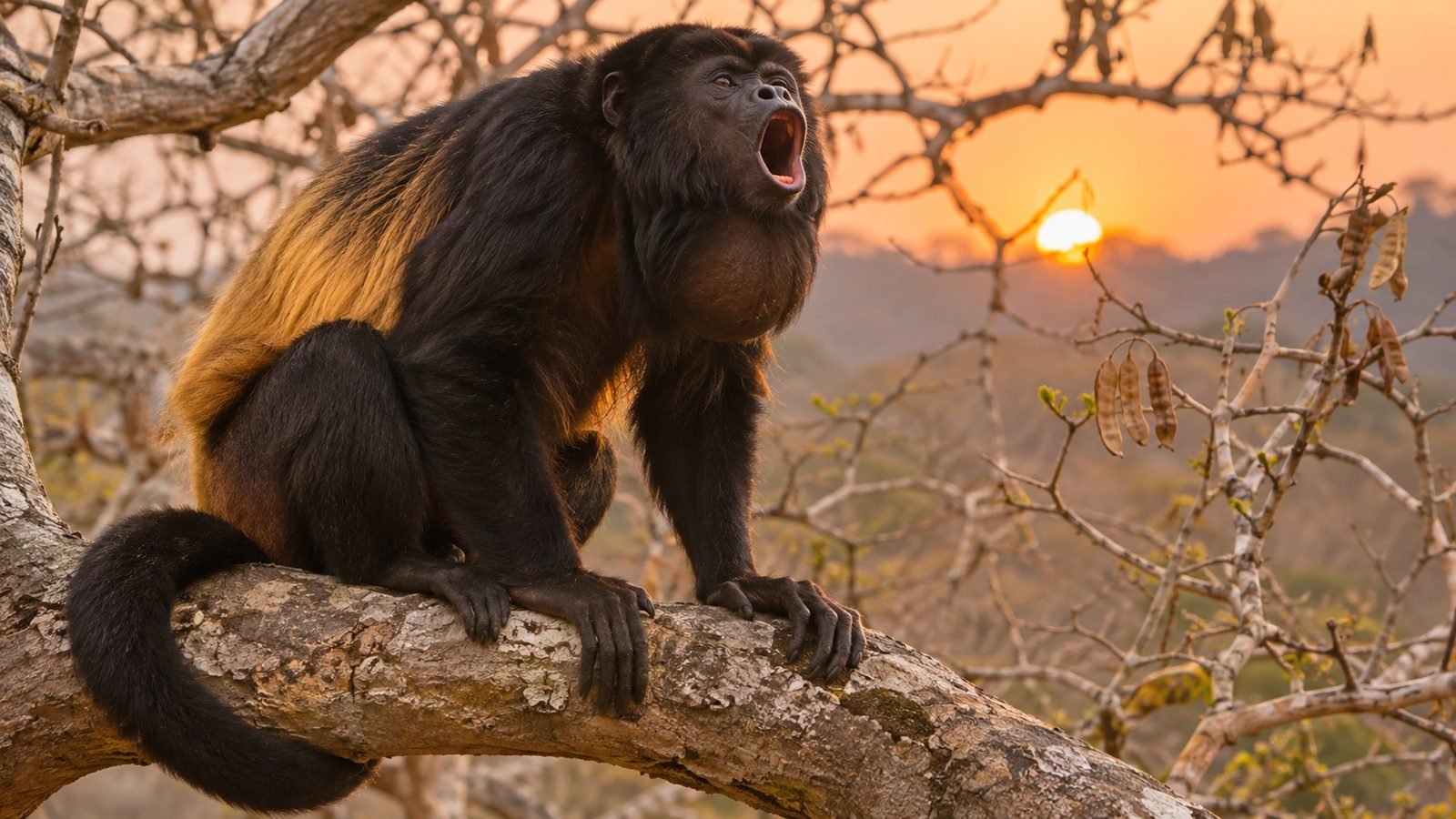
A mantled howler monkey, called a mono congo locally. Black fur, a gold-brown fringe along the flanks, and a male weight of 6 to 10 kilos. They’re among the loudest land animals on earth: the roar carries about 5 km, or 3 miles, in still air. An enlarged hyoid bone in the throat acts as a resonating chamber, which is how a 7 kilo animal sounds like a lion.
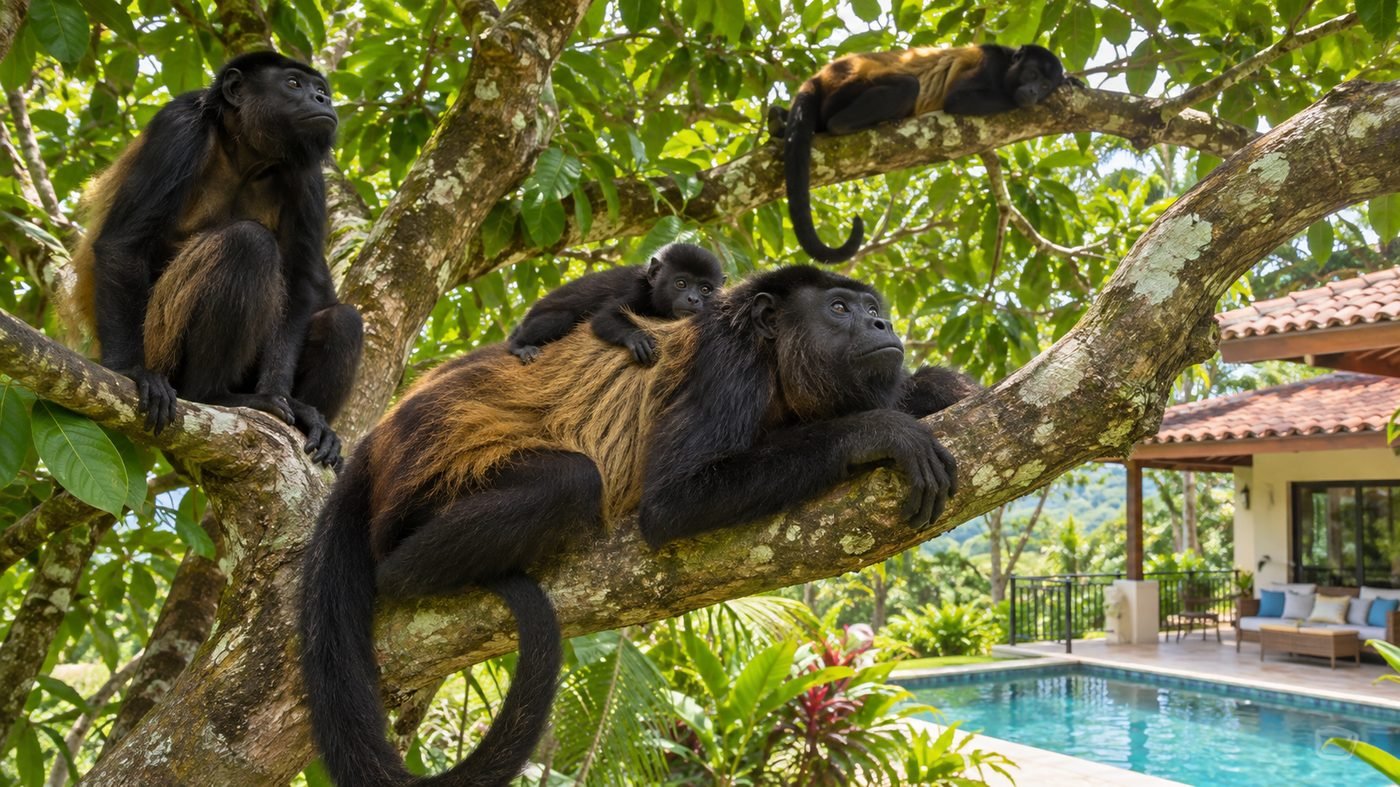
Troops run 10 to 20 animals and spend 60 to 80 percent of the day resting. The roar is the dominant male telling the next troop over where the boundary is, and the next troop answering. On a hillside above Potrero you can hear three or four troops trade calls across the valley.
What time do howler monkeys howl?
Before sunrise and again at dusk. Sunrise on this coast is between 5:20 and 5:50am all year, and the first chorus starts 20 to 40 minutes ahead of it, so plan on 4:45 to 5:30am. The evening call comes as the light goes, around 5:30 to 6pm.
They also roar at thunder, at a rain front rolling in, at a low plane out of Liberia, and at a troop they can hear but can’t see. In the green season, May to November, you get a bonus round most afternoons about 20 minutes before the rain arrives. From December to April, when the Papagayo winds blow, the dawn chorus carries farther because the air is dry.
Are howler monkeys dangerous?
No. They stay in the trees and they don’t want your food. The thieves on this coast are white-faced capuchins, the small grey and white monkeys on the Tamarindo estuary. The only real hazard is standing directly under a troop that has decided to move: they drop what they have to drop before they go, so step out from under the branch.
Two rules. Never feed them, because a troop that learns to beg ends up on a road, and roads and power lines are what kill howlers in Guanacaste. And keep fruit off the terrace table under a ficus, because a juvenile that comes down for a look ends up on a railing near a wire. The rope bridges you see over the roads in Potrero and Surfside are there so troops can cross without touching the lines.
Where can you see monkeys near Flamingo and Tamarindo?
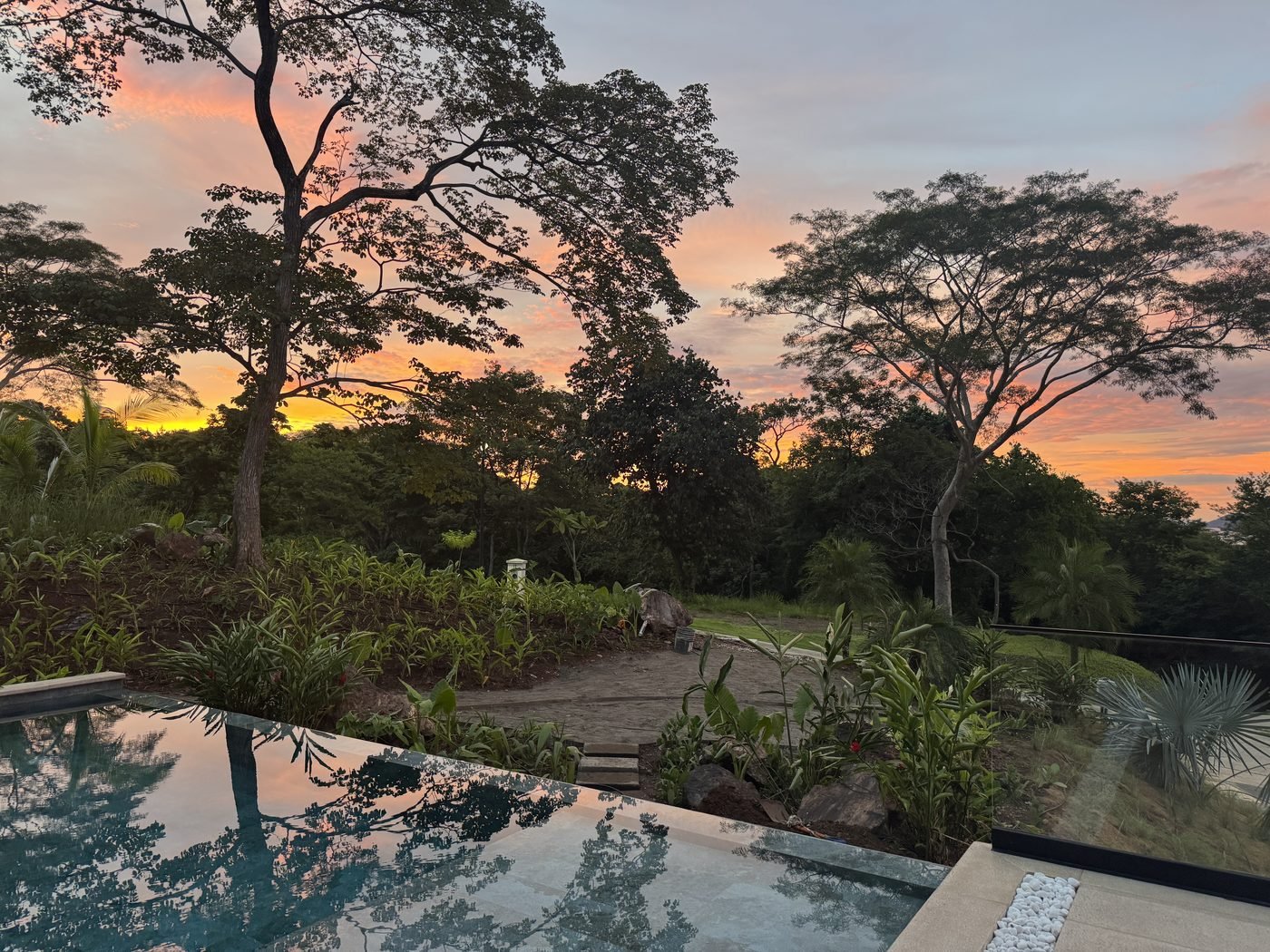
From your villa, if it has big trees. Howlers need a connected canopy, so the hillside houses above Flamingo, Potrero and Surfside with mature guanacaste, ceiba and ficus trees have resident troops. Ask Jenny which houses on the villa list have monkeys; she knows, because guests mention it in every review. A treeless condo on the beach road won’t.
Free spots that work most mornings, no tour needed:
- Potrero and Surfside back streets, 7 to 8am. Walk the gravel roads behind the beach and look for shaking branches in the biggest trees.
- Las Catalinas dry-forest trails. Free to walk, 10 minutes from Flamingo, troops in the ravines on the lower loops.
- The treeline behind Playa Conchal on the Brasilito end, late afternoon.
- The Playa Grande estuary edge, mangrove side, around 4pm. Howlers and sometimes spider monkeys in the taller trees.
- Diria National Park, 20 minutes past Santa Cruz and about 45 minutes from Tamarindo. US$6 per foreign adult at the SINAC gate, open 8am to 3pm, quiet trails, howlers almost guaranteed.
Boat trips on the Tamarindo estuary and the Tempisque river at Palo Verde put you under the troops at eye level, with crocodiles and a few hundred birds thrown in. Those are guided, so they’re Jenny’s to book; she pairs them with the right morning on the family week itinerary. The Rincon de la Vieja day trip gets you howlers on the Las Pailas loop, and the sloth guide covers the one animal that’s hard to find on this coast.
What is the best month to see howler monkeys?
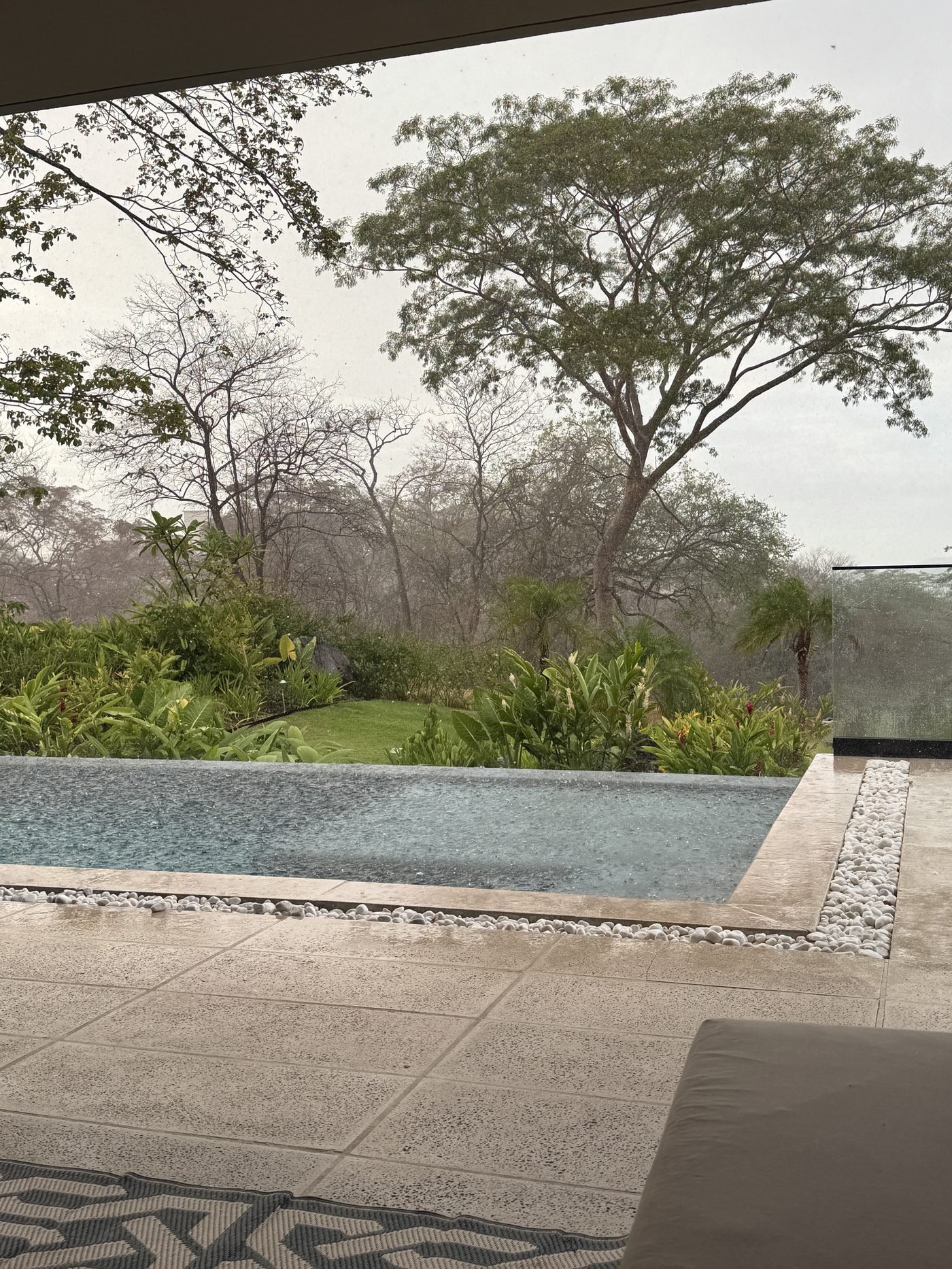
February to April. The dry forest drops most of its leaves between January and April, so a troop that was invisible in a full August canopy sits in plain view on bare branches, usually in the one tree that still has leaves. Scan the green trees first. In the green season you’ll hear them more and see them less.
For small kids this is the easiest wildlife on the coast. You walk out at 7am with a juice box and look up. The toddler plan and the three-day Flamingo and Brasilito itinerary both build it in. For the turtles that share Playa Grande with the monkeys from October to March, read the Las Baulas guide.
Frequently asked questions
What is the loud noise in Costa Rica at night and early morning?
Mantled howler monkeys. They roar before sunrise, around 4:45 to 5:30am on the Guanacaste coast, and again at dusk. The call carries about 5 km and marks troop territory.
Are howler monkeys dangerous to people?
No. They stay in the trees, eat leaves and fruit, and ignore people. The only precaution is not standing directly under a troop that is about to move, and never feeding them.
Where can I see monkeys near Playa Flamingo without a tour?
The back streets of Potrero and Surfside at 7am, the Las Catalinas dry-forest trails, the treeline behind Playa Conchal, and the Playa Grande estuary edge in the late afternoon. Hillside villas with big trees often have a resident troop.
What time of day are howler monkeys most active?
Dawn and dusk. They feed and move in the first two hours after sunrise and the last hour before sunset, and rest through the middle of the day, when they are easy to spot but rarely moving.
What is the best month to see howler monkeys in Guanacaste?
February to April, when the dry forest has dropped its leaves and troops sit in open view. They are present all year; the green season brings more roaring before the afternoon rain but a denser canopy.
How much does Diria National Park cost?
US$6 per foreign adult at the SINAC gate, open 8am to 3pm daily. It is about 45 minutes from Tamarindo via Santa Cruz on paved road; no 4×4 needed in the dry season.
Written by Rob Cosman. Updated November 2026. Prices in US dollars; park fees change, so check them when you go. Park details: SINAC, Parque Nacional Diria, and the Costa Rica Tourism Board (ICT).
Tell Jenny you want monkeys from the terrace. She’ll shortlist the villas with a resident troop and put the estuary morning on the day the tide is right.
Plan our wildlife week with Jenny
Planning more of your trip? See our full guide to why travelers book with a local concierge in Guanacaste.
We Will Plan and Book It For You. Free.
Skip the tourist traps and the language barrier. Tell us your dates and what you want to do. We line up the charters, tours, chef, carts and rentals with operators we know personally. No markups, no fees to you.
Get Your Free Plan